Adjustable Beds · Mattress Compatibility
Can Naturepedic Mattresses Flex on an Adjustable Base? Compatibility Explained
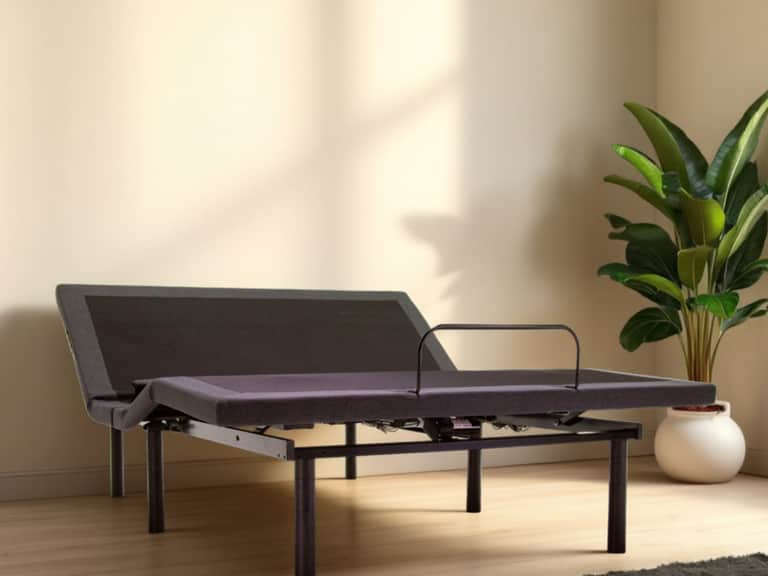
An adjustable bed can turn a familiar sleep setup into something more personal: a gentle lift for reading, a different angle for winding down, or a fully flat position at the touch of a button. But pairing a Naturepedic mattress with a powered base is not a matter of appearance alone. The mattress must be designed to articulate, the base must support it appropriately, and the specific model’s requirements need to align.
Published October 13, 2026
The short answer: it depends on the model
Some mattresses can flex with an adjustable base; others are intended for a flat, stable foundation. The name on the mattress does not settle the question. Naturepedic offers different mattress models and constructions, and their layers may respond differently when the bed bends at the head or foot. The adjustable base also matters: its movement range, design, and support surface determine how the mattress is asked to flex.
For that reason, there is no responsible universal answer that applies to every Naturepedic mattress. Check the manufacturer’s current guidance for the exact mattress model and size, and confirm that the particular adjustable base is an approved or otherwise suitable support. If the available documentation is unclear, ask Naturepedic or the base manufacturer before setup. A few minutes spent verifying details is preferable to discovering that an otherwise appealing combination is not recommended.
This is a compatibility question, not a verdict on comfort or mattress quality. A mattress can be well made and still have foundation requirements that do not suit a particular adjustable base. The right pairing is the one the manufacturers support—not simply the one that fits neatly in the bedroom.
Why mattress construction matters
An adjustable base changes the shape of the sleeping surface. When its head or foot section rises, the mattress must bend along with it while continuing to support the sleeper. Whether it can do so comfortably and reliably depends on its materials, internal structure, flexibility, and the way its layers are secured.
Mattress construction varies widely. A model may combine foam, latex, coils, natural fibers, or several kinds of comfort and support layers. Those materials do not all respond to bending in the same way. Neither does every construction of a given material: thickness, firmness, layering, and the way a mattress is assembled can affect how readily it articulates. It is therefore not enough to hear that “foam flexes” or that a mattress is marketed as organic. Those broad descriptions do not confirm compatibility for a specific model.
Likewise, a mattress that feels supple when pressed by hand may not be designed for repeated movement on a powered base. The base creates a larger, controlled change in angle and may apply force at particular points. The relevant question is not only whether a mattress can bend once, but whether its construction and the manufacturer’s instructions support the intended use over time.
Natural and organic materials are not a separate exception to the usual rules. Certifications and material descriptions can tell you useful things about sourcing or composition, but they do not automatically establish that a mattress is adjustable-base compatible. Treat material information as one piece of the picture, alongside the model’s support requirements and warranty terms.
What happens when a mattress and base do not suit each other?
When a mattress is placed on a base that bends beyond what its construction is intended to accommodate, the result may be poor performance, unnecessary stress, or a setup that does not follow the manufacturer’s instructions. The mattress may not settle properly across the moving sections, or the sleeper may notice an uncomfortable transition as the base changes position. Repeated use can also place strain on materials or components that were not designed for that kind of movement.
Not every issue is immediately visible. A bed can appear to elevate successfully while the mattress is under greater strain than intended. And an initial test in one position does not establish long-term suitability. This is why the model-specific guidance matters more than a quick visual check or a brief trial at home.
Do not force the mattress to conform if it appears to bind, bunch, slide, or resist movement. Return the base to flat, check the setup instructions, and contact the relevant manufacturer for guidance. Avoid attempting to modify the mattress, frame, or base to make the combination work unless the manufacturer has specifically approved the change.
A practical compatibility checklist
Before purchasing or assembling an adjustable-bed setup, collect the exact product names and specifications. “Naturepedic mattress” and “adjustable bed” are not sufficiently precise descriptions for a reliable compatibility check. A model name, size, and base configuration make it possible to compare the instructions that apply to your actual products.
- Identify the mattress model. Check its product label, order information, or official documentation. Similar names or collections may have different constructions and foundation requirements.
- Find the recommended support surface. Look for current guidance on acceptable foundations, slat spacing if applicable, and whether an adjustable base is permitted.
- Identify the exact base. Note its model, size, and configuration, including whether it is a single or split arrangement and which sections articulate.
- Compare movement range. Check how the base raises and lowers the head and foot, and whether the mattress manufacturer sets limits on articulation or positioning.
- Confirm size and dimensions. The mattress should match the base as specified. A mismatch can interfere with support, fit, or movement.
- Review the warranty language. Confirm whether use on an adjustable base is allowed and whether any conditions apply.
- Ask when documentation leaves room for doubt. Provide both manufacturers with the complete mattress and base details, rather than relying on a general answer about a product family.
Save the documents or written guidance you relied on. This creates a clear reference if you later change the base, mattress, or setup. Compatibility applies to a particular combination; replacing one part of the system can change the answer.
Movement range is part of the match
Adjustable bases are not interchangeable simply because they share a basic function. One may offer head and foot movement, while another may include additional articulation or a more extensive range of motion. Some bases allow multiple sections to move independently; others use linked or split configurations. The details influence how the mattress is supported as the bed changes position.
A base with extra features is not automatically a better match for every mattress. The important consideration is whether the mattress is approved for the base’s movement and whether the support surface remains appropriate throughout its range. If the manufacturer specifies restrictions, follow them rather than assuming a gentle setting will make an unsupported combination acceptable.
For couples considering a split configuration, compatibility needs to be checked for each mattress and each side of the base. Independent movement can allow partners to choose different positions, but the arrangement also introduces separate moving sections and its own sizing and setup considerations. Confirm the precise configuration with both manufacturers before ordering.
Warranty questions deserve a close read
A warranty is not simply a statement of how long a product is covered. Its conditions matter. A mattress warranty may specify the type of foundation required, the way the mattress must be supported, or circumstances that could affect coverage. The wording can vary by product and may be updated, so use the documentation for the exact model rather than an older summary or a statement found in a discussion forum.
Look for the warranty’s foundation or support requirements and any terms that address adjustable bases. If the answer is not explicit, contact the manufacturer and ask a clear question: Is this specific mattress model approved for use with this specific adjustable base, and does that use comply with the mattress warranty? If the base has its own warranty, check its requirements as well.
Keep the answer in writing where possible. A verbal reassurance can be easy to misremember, particularly when several models or configurations are being discussed. Written confirmation gives you a record of what was checked and by whom, without substituting for the warranty itself.
Be cautious about broad assurances such as “all mattresses work on adjustable beds” or “all mattresses in this collection are compatible.” They may not account for a particular construction, model revision, base movement range, or warranty condition. The most useful guidance is specific enough to identify both sides of the pairing.
Before the first adjustment
Once compatibility has been confirmed, follow the base instructions for assembly, placement, and mattress installation. Use the support surface as designed, secure or position the mattress only as the manufacturer directs, and check that bedding, cables, and nearby furniture do not interfere with movement. A carefully planned setup is more dependable than trying to correct a problem after the bed has been fully assembled.
Begin with modest adjustments and observe how the mattress sits as the base moves. This is a practical setup check, not a substitute for manufacturer approval. If the mattress shifts unexpectedly, catches, or appears strained, return the base to flat and seek advice rather than repeatedly testing the position. Keep remote controls and any moving parts accessible as directed by the base manual.
Room layout deserves attention, too. Adjustable bases can change the bed’s height and footprint as they move, and the final arrangement should leave appropriate clearance around the frame. Follow the base manufacturer’s safety instructions, especially if children or pets may be near moving sections. Do not place objects where they could obstruct the mechanism.
Comfort is personal; compatibility is specific
People often consider adjustable beds because they want more choice in how they rest. A raised head section can create a convenient position for reading, while other angles may suit watching television or relaxing. These are practical uses, but a base should not be treated as a medical solution. Anyone seeking help with a health concern should speak with an appropriate healthcare professional rather than relying on a bed position as treatment.
Once a mattress-and-base pairing is verified, take time to explore comfortable settings gradually. Small changes may feel quite different from a flat sleeping surface, and preferences can vary from one person to another. There is no single angle that works for everyone, and a preset position is a starting point—not a promise of a particular health outcome.
Comfort, construction, and formal compatibility are related but distinct. A mattress may feel comfortable on a base during a short test, yet still require confirmation that the arrangement meets its support and warranty conditions. Conversely, an approved pairing does not guarantee that every sleeper will enjoy the feel. Check both dimensions: documented suitability and personal comfort.
Common assumptions to leave behind
- “Organic means flexible.” Organic describes aspects of materials or sourcing; it does not establish that a mattress is designed for articulation.
- “If it bends, it is compatible.” A mattress’s ability to bend briefly does not confirm that repeated adjustable-base use is supported or covered by warranty.
- “One model’s approval covers the whole brand.” Different models can have different layer combinations, constructions, and foundation requirements.
- “Every adjustable base moves the same way.” Bases vary in configuration and range, so the exact unit matters.
- “A retailer’s general description settles the question.” General guidance can be helpful, but model-specific manufacturer documentation is the more dependable reference for compatibility and warranty conditions.
How to get a useful answer from the manufacturer
When contacting customer support, include the mattress model and size, the adjustable base model and size, and the base’s configuration. Ask whether the combination is approved, whether there are limitations on movement or use, and whether the arrangement meets the mattress warranty’s foundation requirements. If you are considering a split base, state that clearly.
It can help to have product labels, manuals, and purchase details nearby. If a representative provides guidance, ask where it is documented or request a written response. If the two manufacturers offer different answers, pause before setup and ask each to address the other product by its exact model name. A specific mismatch should be resolved directly, not settled through guesswork.
Also ask whether the guidance applies to current production and the model revision you own. Product specifications can change over time, and a page describing a similar mattress may not precisely match yours. Clear identification reduces the chance of receiving advice that is accurate for a different version.
A considered pairing, not a leap of faith
Pairing a Naturepedic mattress with an adjustable base can be straightforward when the specific mattress and base are designed to work together. The elegant simplicity of a button-controlled bed depends on details beneath the surface: construction, support, articulation, dimensions, and warranty requirements. Those details are worth checking before the first night, not after a concern appears.
Start with the exact model, read its current foundation guidance, compare the base’s movement range, and confirm the warranty terms. If anything remains uncertain, ask both manufacturers for a model-specific answer. That measured approach preserves choice without making assumptions—and helps ensure the final sleep setup feels as considered as it looks.
The most reliable rule is also the simplest: do not assume that every mattress flexes alike. Verify the combination you plan to use, follow its instructions, and let the manufacturer’s guidance—not a broad generalization—set the terms for your adjustable bed.